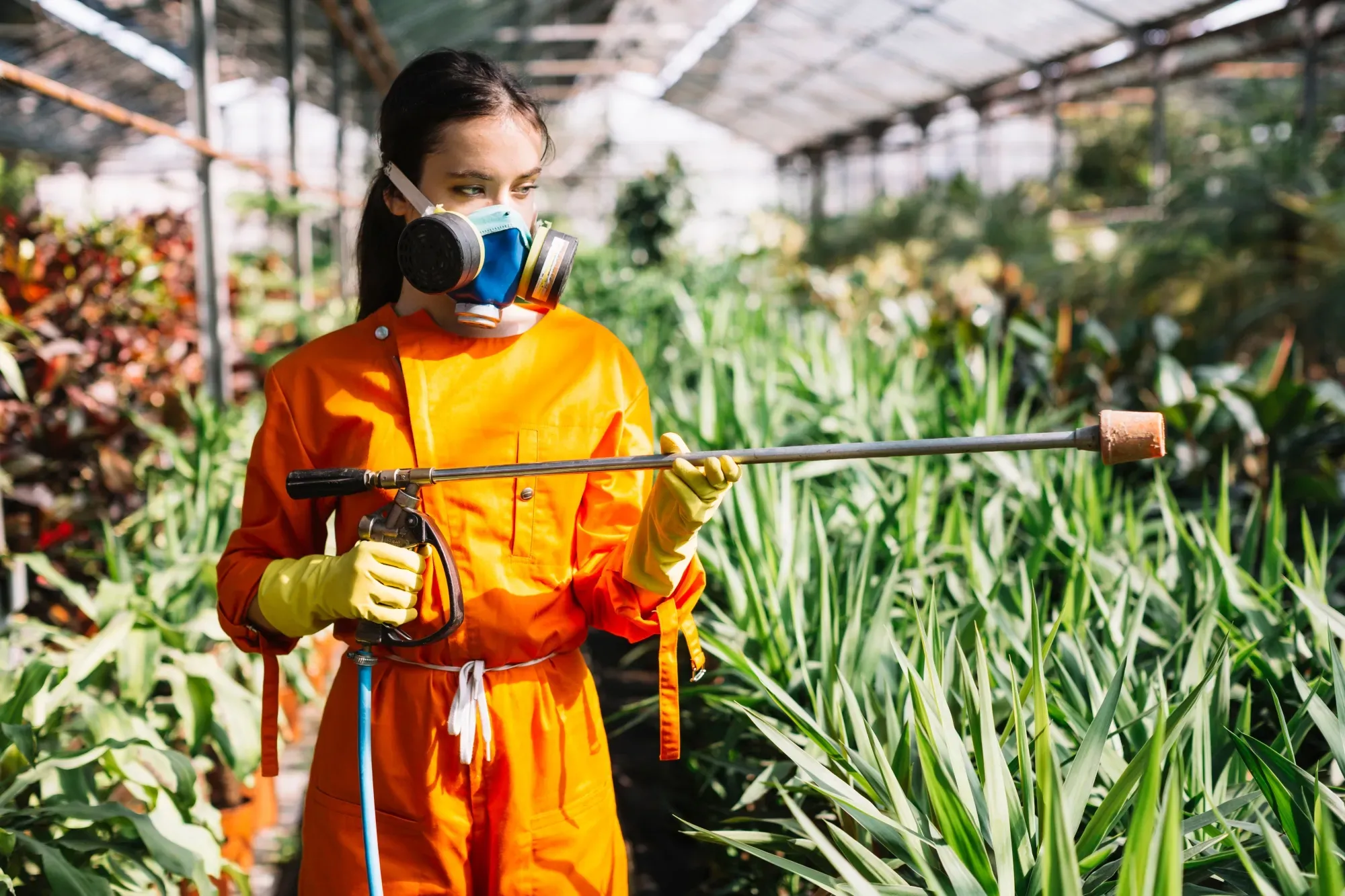
Yes — when a licensed technician uses a Health Canada-registered product according to its label, pest control chemicals are safe for pets and kids. The real question isn't "safe or not," it's which product, applied how, with what re-entry time — and that's exactly what a good exterminator should be able to answer before they ever set foot in your Milton home.
The short answer
Every pesticide used legally in Canada has gone through Health Canada's Pest Management Regulatory Agency (PMRA) — a registration process that reviews toxicity data before a product can be sold or applied here at all. That doesn't mean every product is equally low-risk, or that every situation calls for the same treatment. It means the bar for what's allowed is high, and the bar for what's smart for your specific household — a toddler who puts everything in their mouth, a cat that grooms itself constantly, a dog that eats grass in the backyard — is something you and your technician should talk through before treatment day. It's also why "is pest spray toxic" is really a "toxic to what, applied how" question rather than a yes-or-no one.
How Health Canada regulates the products we use
Before a pest control product can be registered for use in Canada, PMRA requires manufacturers to submit extensive data on human health risk, environmental impact, and effectiveness. Registered products carry a PCP (Pest Control Product) number on the label, along with legally required instructions — including re-entry intervals, first-aid information, and precautions specifically about children and pets.
This is why the label is not fine print you can skip. It's the product's safety instructions, written to the standard a federal regulator required before approving the product at all. A technician who can't tell you the PCP number or re-entry time for what they're about to apply in your home hasn't done their homework — that's a fair thing to ask.
What "kid- and pet-safe" actually means in practice
"Safe" isn't a single checkbox — it's a combination of three things:
- The product itself. Lower-toxicity formulations exist for most common jobs. Gel baits and sealed bait stations, for example, target the pest directly instead of coating open surfaces — the kind of targeted approach a child-safe exterminator should default to.
- How it's applied. A technician who treats baseboards and cracks with a targeted gel bait is creating a very different exposure profile than a broad perimeter spray — even using the same active ingredient.
- What you do afterward. Keeping the treated area clear for the stated re-entry time, storing children's toys and pet bowls away from application zones, and airing out the space as directed all matter as much as the product choice.
At Shaw Pest Control, our default approach leans on Integrated Pest Management (IPM) — using the least invasive, most targeted method that will actually solve the problem, rather than defaulting to the broadest spray available. That's what eco-friendly pest control in Milton looks like in practice, and it isn't a marketing claim — it's a practical one: a colony you can bait and remove is a colony you don't need to spray for repeatedly.
Simple precautions for Milton households
Whether you're booking a first treatment or you've had recurring service for years, these apply every time:
- Ask for the product name and PCP number before treatment day — write it down or keep the service report.
- Confirm the re-entry interval and put it in your calendar or on the fridge, especially if you have young kids.
- Remove pet food, water bowls, and children's toys from the treatment area beforehand.
- Ventilate as directed — open windows if the label or technician recommends it.
- Keep the original service report in case a vet or poison control line ever needs the product details.
What should I ask my exterminator before I book?
If you have kids or pets at home, it's reasonable to ask exactly which PMRA registered pesticide will be used before you confirm an appointment — along with a few follow-ups:
- Which specific product(s) will be used, and what's the PCP number?
- Is this a spray, a gel bait, or a sealed bait station — and why is that the right choice for this pest?
- What's the re-entry interval for this specific product?
- Do we need to remove anything (food, toys, bedding) from the treatment area first?
- Is there a lower-toxicity option for this particular job?
A pet-safe exterminator Milton families can trust will answer these clearly, without hesitation — that tells you something about how they operate, not just about the product.
FAQ
This depends on the specific product's label, set by PMRA during registration. Most residential treatments require keeping children and pets out of the treated area until it's fully dry or for a specific re-entry interval — your technician will confirm the exact time for the product used in your home.
Lower-toxicity, targeted-application products (like gel baits and sealed bait stations) generally reduce exposure risk compared to broad-spectrum sprays, because they limit contact to the pest itself rather than open surfaces. Effectiveness still depends on choosing and applying the right product for the specific pest — "natural" alone isn't a guarantee of safety or performance.
Ask which specific products will be used and their PCP numbers, what the re-entry interval is, whether it's a spray, gel bait, or sealed bait station, and whether anything needs to be removed from the treatment area beforehand.
Contact your veterinarian and the product manufacturer's poison control line right away, with the product name and PCP number on hand — it's on your service report. This is exactly why confirming the re-entry interval before treatment matters more than reacting after exposure.
Booking With Kids or Pets at Home
You shouldn't have to choose between dealing with a pest problem and feeling good about what's being applied in a home with kids or pets in it. If you want to know exactly which pest control chemicals are safe for your pets and family before anyone shows up at your door, ask us — we'll walk you through the product, the method, and the timeline before we book anything.
Book a Pet-and-Kid-Safe Treatment Consult