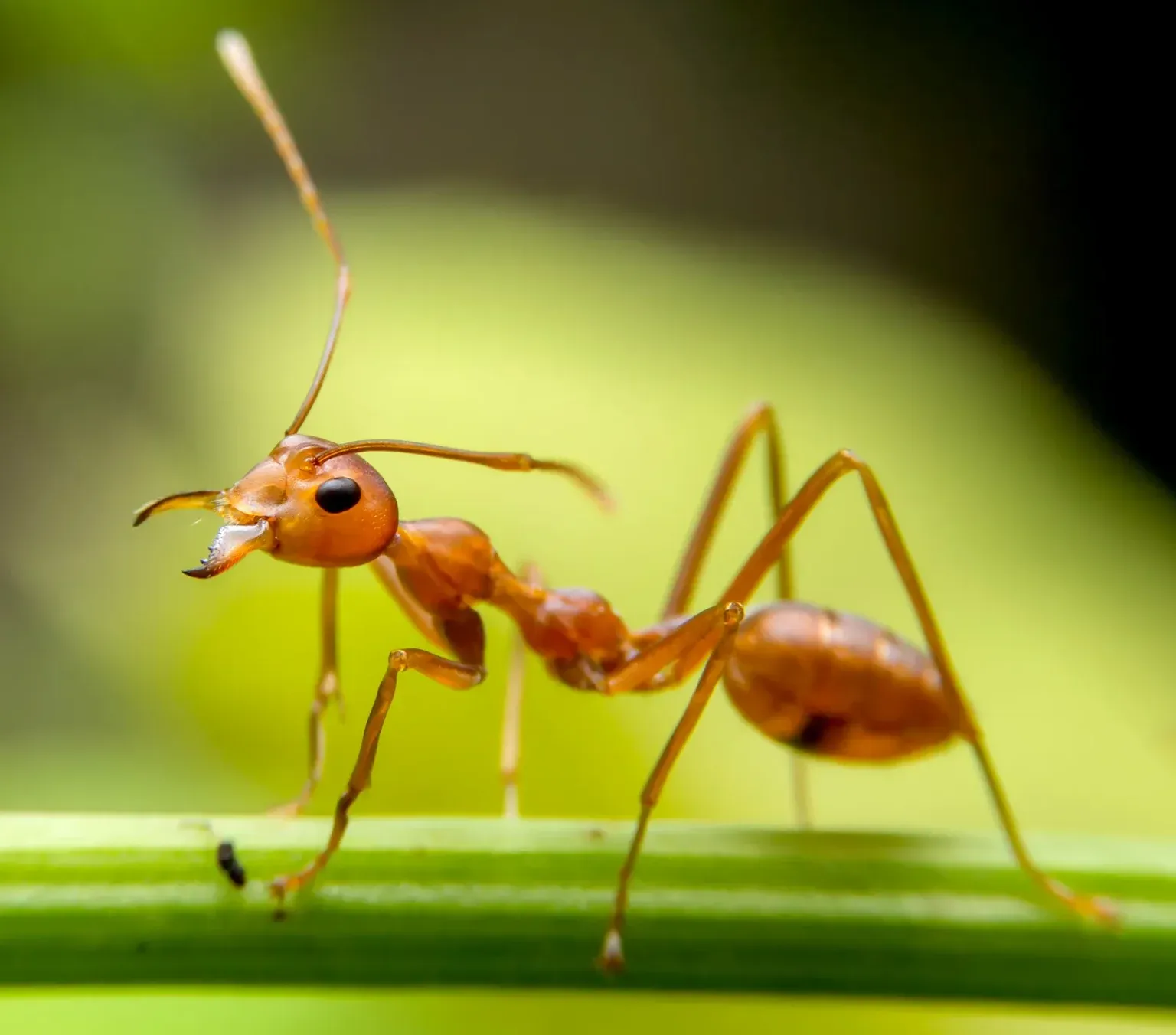
Baiting, not spraying, is what actually kills an ant colony — spray only kills the worker ants you can see on contact, while bait is carried back to the nest and shared with the queen and the rest of the colony that spraying never reaches.
The short answer
An ant colony can have thousands of workers and one or more queens tucked away in a nest you'll probably never see directly. Spraying deals with the handful of workers currently visible on your counter; it does nothing for the queen still laying eggs somewhere in a wall void or under a slab. Bait is designed to be carried back to that hidden nest — which is the only way to actually stop new workers from replacing the ones you killed.
Why spraying visible ants often doesn't solve the problem
Contact spray is fast and satisfying — the ants you see die immediately — but it only ever reaches the workers out foraging, never the colony itself. For some ant species, spraying or otherwise disturbing a colony can actually trigger "budding," where the colony splits into multiple smaller colonies to escape the disturbance. That can leave you with more entry points and more visible activity than before, not less.
How ant baiting actually works
Bait is a slow-acting active ingredient mixed with something ants are drawn to as food. Worker ants carry it back to the nest and share it with the rest of the colony, including the queen, through normal feeding behavior — a process called trophallaxis. Because it's slow-acting, the worker ants don't die immediately at the bait, giving them time to spread it through the colony before the effect sets in. That delay is a feature, not a flaw — it's the same logic behind rodenticide bait stations for rodents: a contained, targeted product that reaches the source of the problem instead of just the individuals you can see.
When spraying still makes sense
Spraying isn't useless — it's just solving a different problem. A perimeter spray around a home's exterior foundation acts as a prevention barrier, discouraging new ants from coming in, rather than eliminating an existing indoor colony. And if you have an active trail causing immediate concern (near food prep areas, for example), a quick contact treatment for visible activity can make sense alongside — not instead of — a bait-based colony treatment.
| Baiting | Spraying | |
|---|---|---|
| Reaches the queen/colony | Yes — that's the goal | No — contact-kill only |
| Speed | Slower, by design | Immediate, visible ants only |
| Risk of colony budding | Low | Higher for some species |
| Best used for | Eliminating an indoor colony | Exterior prevention barrier |
What Shaw Pest Control recommends for ants
We identify the species first, since bait preference and colony behavior differ between carpenter ants, pavement ants, and others. From there, our default approach pairs targeted interior baiting to eliminate the colony with an exterior perimeter treatment to reduce new activity — the same targeted, lower-toxicity approach we favor across every pest we treat.
FAQ
Spraying visible ants kills only the workers you can see, not the colony or queen producing them. For some species, disturbing a colony with spray can even trigger it to split into multiple smaller colonies (a behavior called budding), which can make the problem look worse rather than better.
It varies by species and colony size, since the bait needs time to be carried back and shared through the colony before it has an effect. Seeing ants at the bait for a few days after placement is often a sign it's working, not a sign it has failed — your technician will tell you what to expect for your specific situation.
Avoid spraying or wiping down active ant trails right after placing bait — ants use scent trails to find food, and a cleaning product or spray can disrupt the trail leading to the bait. Wipe down unrelated surfaces as usual, but leave the trail near the bait station alone until your technician says otherwise.
Yes, but for a different purpose — perimeter spraying around a home's exterior is mainly a prevention barrier that discourages new ants from entering, not a way to eliminate an existing indoor colony. Baiting and perimeter treatment are often used together rather than as substitutes for each other.
Ant Problem in Milton or Brampton?
We'll identify the species, target the colony with the right bait, and back it up with exterior prevention — not just a spray that treats the symptom.
See Our Ant Control Service